ShiftDock
Walkthrough · In development · 2026Staff scheduling for care teams
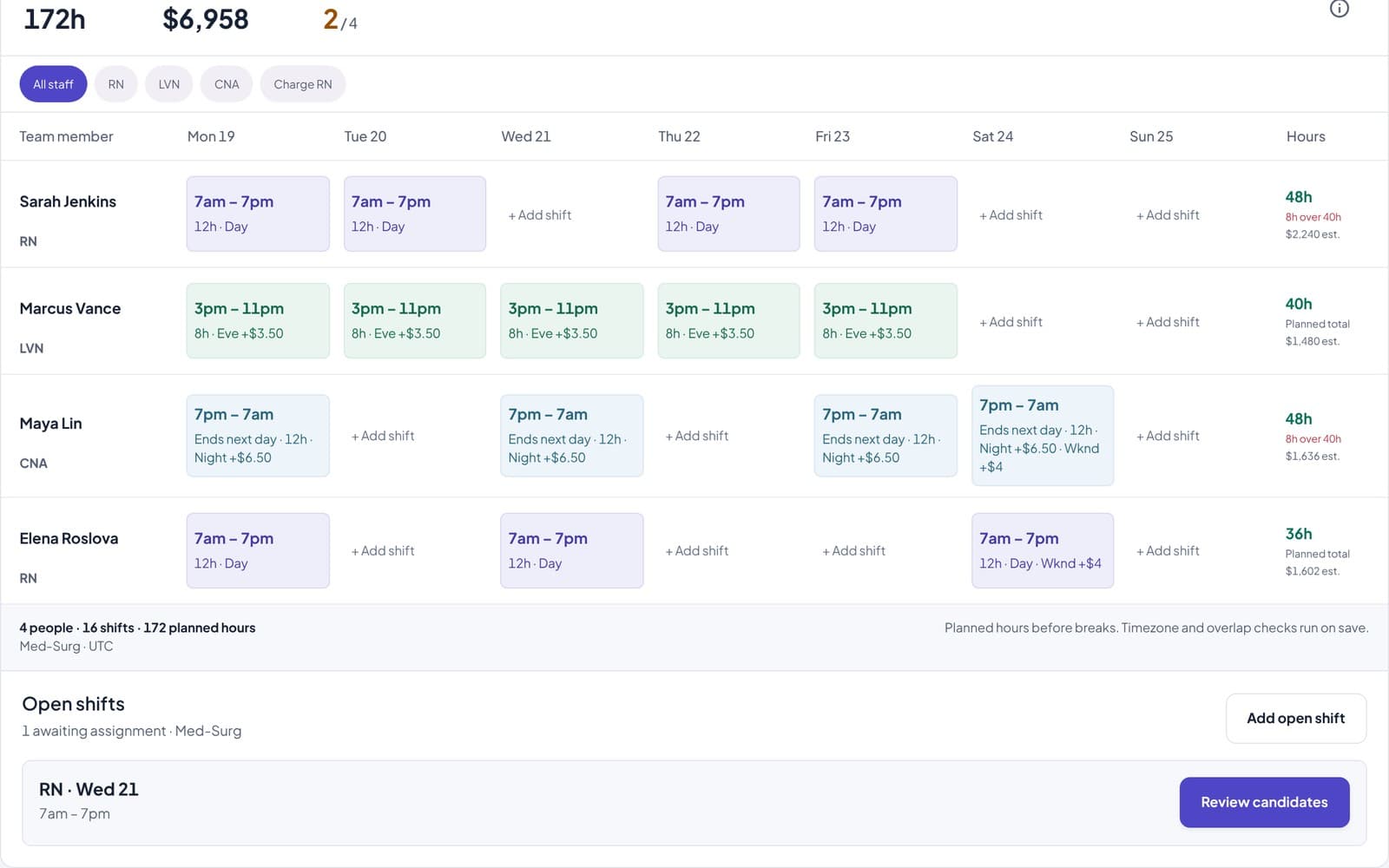
A scheduling workspace for hospitals and nursing homes: managers build a private draft roster, review every conflict, then publish. Nurses share availability, claim open shifts and see only the published schedule. Shift differentials, HPPD staffing targets and labor-cost previews sit beside the roster.
Development build · fictional roster data · no production rollout claimed
What a manager does
- 01
Build a private draft roster for the unit. Nothing on it is visible to staff yet.
- 02
Review availability staff have shared, dated or weekly, and approve or reject each with its impact shown.
- 03
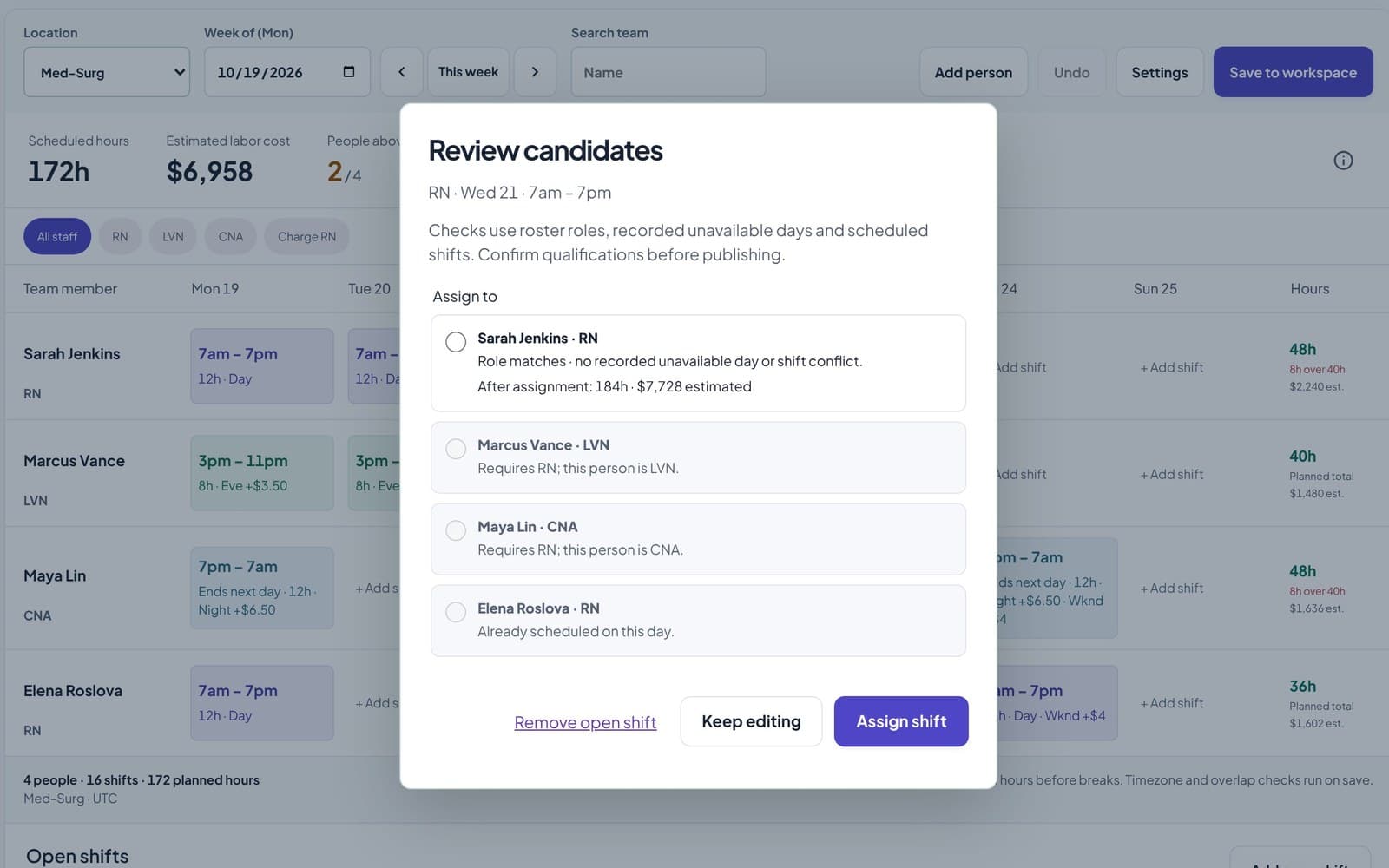
Fill an open shift from reviewed candidates: role, recorded unavailability, rest rules and the hours each person would end up with.
- 04
Validate the whole draft, every date, not just the visible week. A silent conflict cannot pass.
the boundary - 05
Publish. Only then does a shift reach a nurse's schedule.
Why it is built this way
Clinical rosters fail quietly: a published shift that breaks a rest rule, an availability nobody recorded, an overtime hour nobody notices until payroll. A spreadsheet cannot explain why a schedule is wrong before it goes out.
I built the manager workflow around a private draft that is validated as a whole before anything is published, with reviewed availability, draft history, templates and imports feeding it. The nursing planner generates a four-week roster against rest and commitment rules, then shows its reasons.
- Validated before publish
- Every dateThe whole draft, not the visible week
- Roster generation
- 4 weeks121 fictional workers, rest and commitment rules
- Regression tests
- 1,255Passing on the current checkpoint
Key product decision
Treat publication as a reviewed, atomic step: nothing reaches an employee's schedule until the complete draft passes validation, so a silent conflict can never ship.
What is built
- →Draft → validation → reviewed publication, checked across every date rather than the visible week
- →Reviewed availability: staff share dated and weekly availability, managers approve or reject with the impact shown
- →Draft history with undo, reusable templates, bulk edit, and roster and schedule imports with receipts
- →Nursing planner that generates four weeks for 121 fictional workers against rest rules and weekly commitments
- →Shift differentials, HPPD staffing targets and overtime previews beside the roster
- →1,255 regression tests passing on the current checkpoint